A cocktail reception succeeds or fails in the first few bites. Guests may remember the champagne tower or waterfront view, but they also remember whether there was something satisfying to eat while they mingled. The best foods for cocktail reception service are polished, flavorful, and easy to enjoy in one or two bites without interrupting conversation, balancing a drink, or searching for a table.

For hosts in Naples, Bonita Springs, Marco Island, and across Southwest Florida, the goal is usually more than putting out a few appetizers. A well-planned reception should feel generous, look intentional, and move naturally from the first welcome cocktail to the final farewell. That requires the right mix of passed appetizers, culinary displays, timing, and staffing.

What Makes the Best Foods for a Cocktail Reception?

Cocktail food has a different job than dinner. It must be easy to hold, attractive at room temperature or while freshly passed, and substantial enough to keep guests comfortable. A beautiful dish that requires a knife, drips easily, or becomes limp after ten minutes may be excellent in a seated dining room, but it is not always right for a reception.

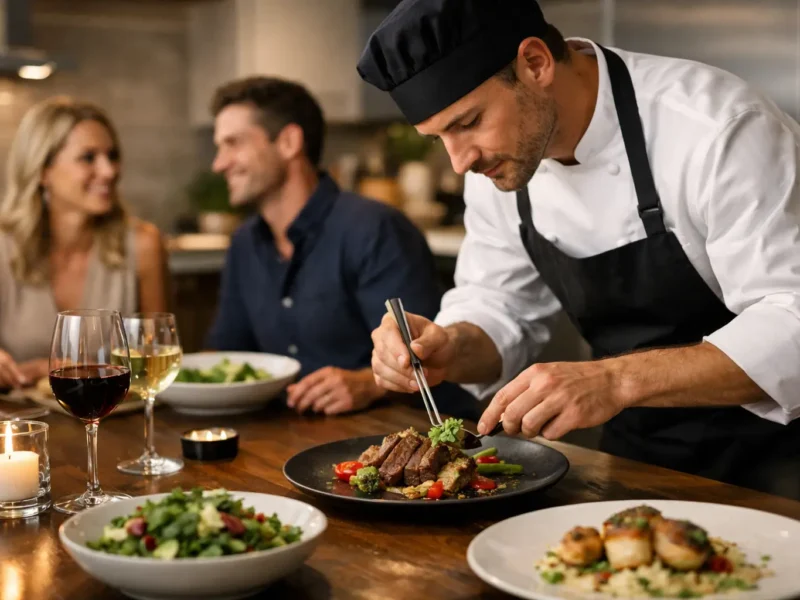
The strongest menus pair familiar favorites with a few elevated choices. Think tender beef crostini alongside chilled shrimp, miniature crab cakes with a bright citrus aioli, or savory chicken satay with a housemade sauce. Guests appreciate recognizable ingredients, while premium presentation and thoughtful seasoning make the experience feel special.

Balance matters as much as variety. A reception centered only on rich, fried bites can feel heavy quickly, especially at an outdoor Florida event. A menu made entirely of light vegetables and seafood may look refined but leave guests hungry. Combining warm and cold items, indulgent and fresh flavors, plus proteins and vegetarian options gives the menu more range and helps every guest find something they enjoy.

The One-Hand Rule

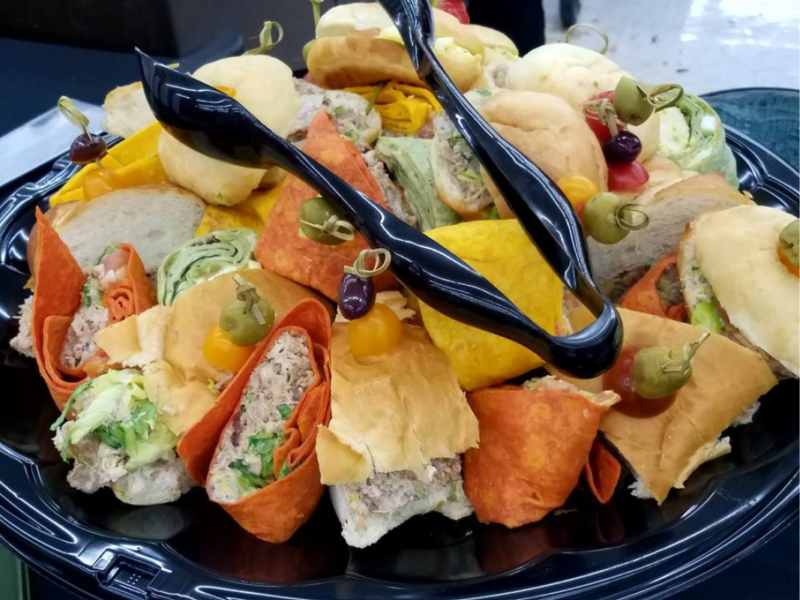
A useful standard is simple: guests should be able to eat each selection with one hand. Miniature forks can work for a few composed items, but most of the menu should not require formal place settings. Skewers, crisp crostini, petite cups, individual spoons, lettuce wraps, tartlets, and neatly portioned sliders all make sense because they are easy to manage in a social setting.

Avoid oversized portions, sauces that travel, and garnishes that fall apart on contact. A caterer can often adapt a favorite dish into a reception-friendly format. Rather than serving a full entrée-style seafood preparation, for example, serve a composed seafood bite in a tasting spoon or crisp phyllo shell.

Match the Food to the Drinks

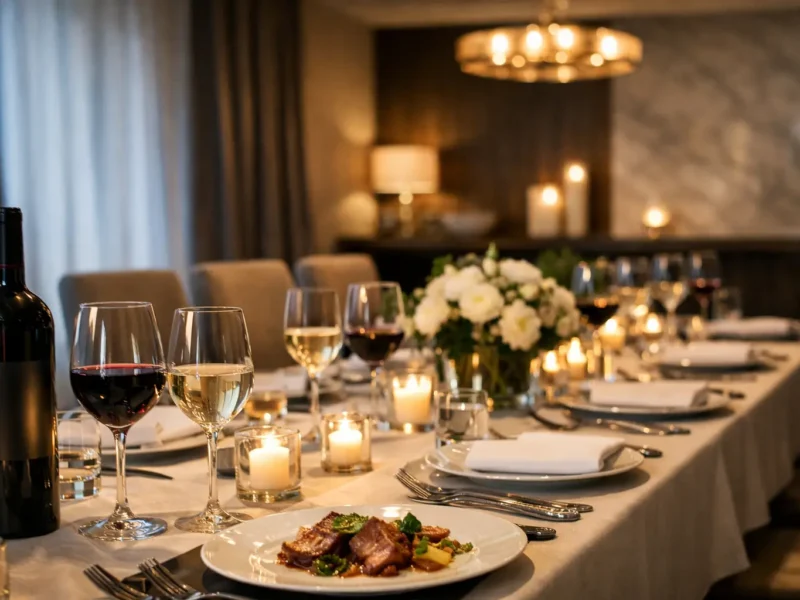
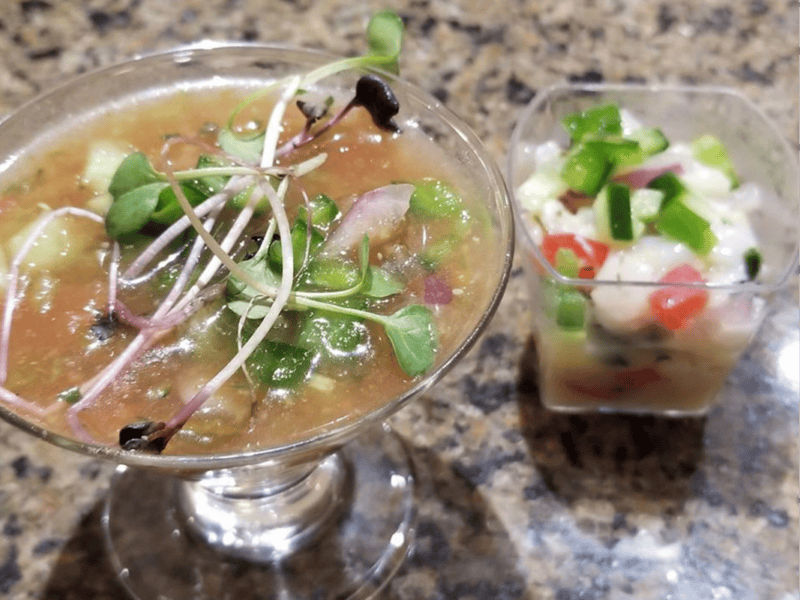
Cocktails should influence the menu, not exist separately from it. Crisp sparkling wine and champagne pair naturally with chilled seafood, delicate canapés, and creamy cheeses. Citrus-forward cocktails work well with bright ceviche-style flavors, grilled shrimp, and avocado. Bourbon, old fashioneds, and richer reds call for more savory selections such as beef tenderloin crostini, bacon-wrapped dates, or miniature short rib bites.

This does not mean every appetizer needs a dedicated pairing. It means the menu should share a point of view with the bar. When the food and drinks feel coordinated, the reception feels more polished without becoming overly formal.

Build a Menu With Passed Bites and Elegant Displays

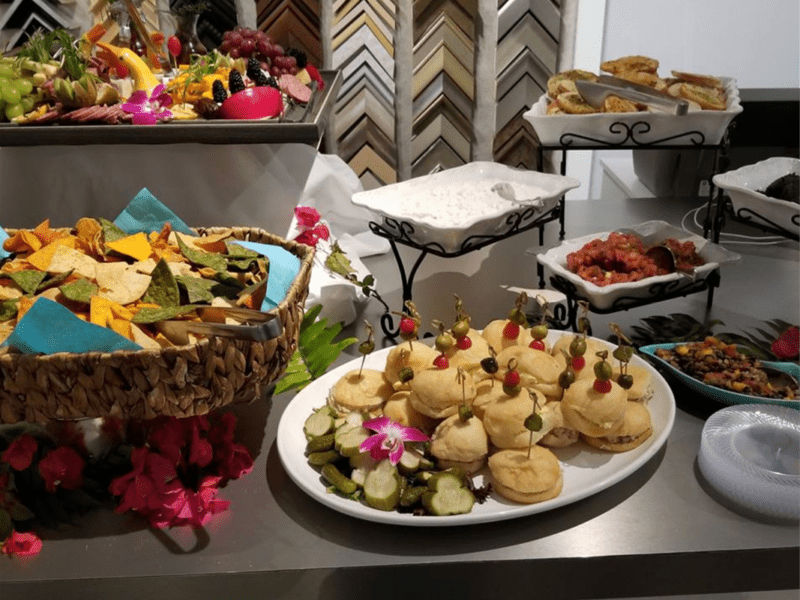
The most successful cocktail receptions rarely rely on one service style alone. Passed appetizers create movement and make guests feel cared for, while displays give them a destination and a chance to graze at their own pace. Together, they create a reception that feels abundant rather than crowded around a single buffet table.

Start With a Display That Sets the Tone

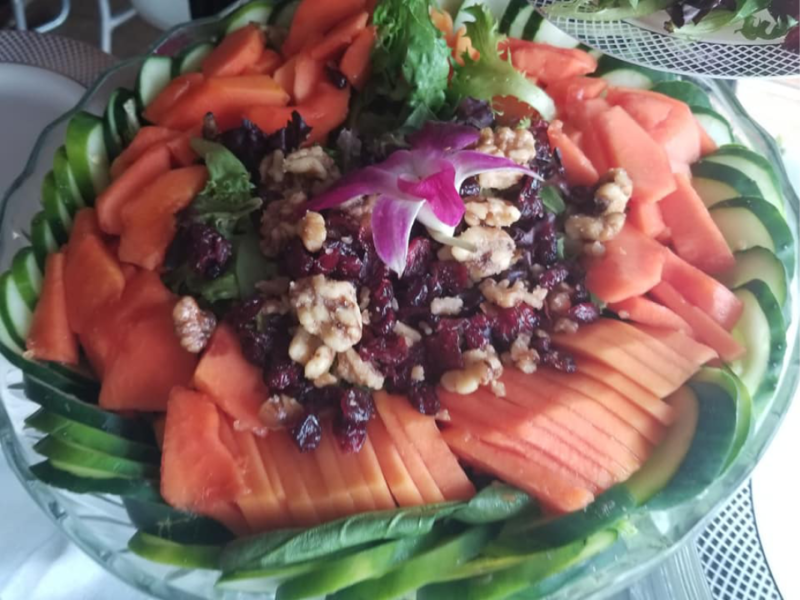
A culinary display should be more than a board placed on a table. It is part of the room’s presentation and often the first food guests see. An upscale cheese and charcuterie display, for example, can include premium cheeses, cured meats, fresh and dried fruits, nuts, artisan crackers, preserves, and thoughtful accompaniments arranged with height and color.

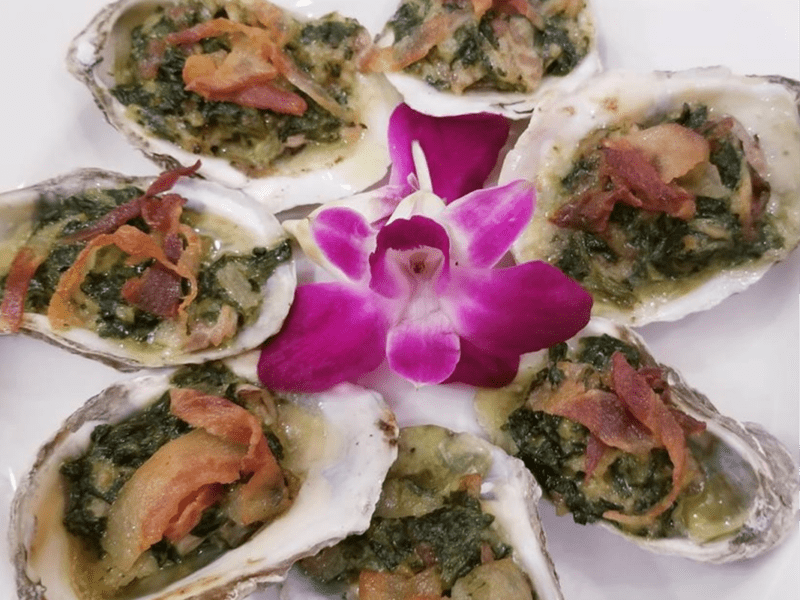
For a coastal Southwest Florida gathering, a chilled seafood presentation can make an immediate impression. Shrimp cocktail, oysters where appropriate, smoked fish dip, and citrus-forward seafood selections feel suited to the setting, particularly for an evening reception or waterfront venue. For a more relaxed but still elevated event, a Mediterranean display with hummus, whipped feta, marinated vegetables, pita, and grilled flatbreads offers broad appeal.

The right display depends on the guest list and event timing. A business reception may benefit from an approachable, tidy display guests can visit between conversations. A wedding cocktail hour can support a more dramatic presentation, particularly when it complements the floral design, bar, and venue style.

Keep Passed Appetizers Moving

Passed mini butler appetizers bring restaurant-quality service directly to guests. They also help avoid the common problem of guests waiting in line or missing food while speaking with a client, colleague, or family member.

A balanced passed selection often includes one seafood bite, one meat-based bite, one vegetarian option, and one slightly more substantial item. Mini crab cakes, bacon-wrapped scallops, beef tenderloin crostini, chicken skewers, stuffed mushrooms, caprese skewers, vegetable spring rolls, and petite sliders can all work well when prepared and served at the right moment.

The order matters. Begin with lighter chilled or crisp selections as guests arrive, then introduce warm savory bites after the room has settled. Save the more filling options for later, especially if the event is replacing dinner. This pacing gives guests time to enjoy each course of the reception instead of filling up immediately on the first tray.

Plan Portions Around the Event, Not Just the Guest Count

Portion planning depends on the time of day, reception length, alcohol service, and whether dinner follows. A 90-minute welcome reception before a formal dinner requires a different approach than a three-hour anniversary party scheduled from 6:00 to 9:00 p.m.

For a shorter event where a meal follows, plan roughly five to seven appetizer pieces per guest, supported by one or two displays. For a two- to three-hour reception held during a typical meal period, eight to twelve pieces per guest is a more comfortable starting point. If the reception is intended to replace dinner, plan closer to twelve to fifteen substantial bites per person, with filling options such as sliders, skewers, mini tacos, or petite composed bowls.

These numbers are guides, not guarantees. A group of colleagues at a late-afternoon corporate event may eat lightly. A wedding crowd that has been traveling, drinking, and dancing may eat considerably more. Your caterer should ask about the event schedule, bar package, guest demographics, and whether guests will have access to dinner afterward before recommending quantities.

Do Not Treat Dietary Needs as an Afterthought

A refined menu makes room for dietary preferences without making certain guests feel singled out. Vegetarian, gluten-conscious, dairy-free, and nut-free options should be integrated into the overall offering and presented with the same attention to flavor and appearance as every other selection.

Rather than offering one predictable vegetable platter as the only alternative, include choices such as roasted vegetable tartlets, crisp vegetable spring rolls, stuffed mushroom caps, plant-forward skewers, or gluten-conscious seafood bites. Clear planning also helps the service team answer guest questions accurately and prevent cross-contact where necessary.

For weddings and private celebrations, it is wise to identify serious allergies in advance. For corporate receptions, ask whether the organization has a known dietary policy or attendee list that requires additional consideration. A small amount of advance planning protects guests and avoids awkward last-minute substitutions.

Presentation and Staffing Are Part of the Menu

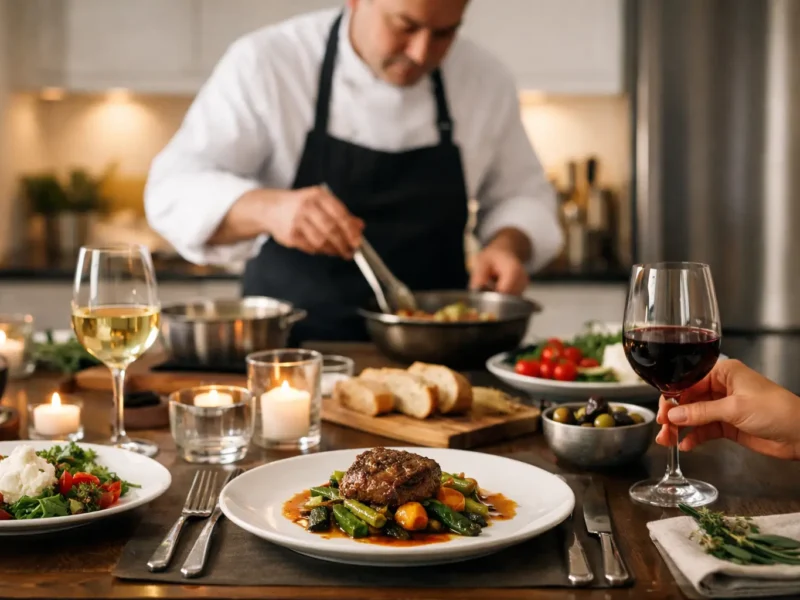
The finest food can lose its impact if trays are not replenished, hot bites arrive lukewarm, or displays become disorganized midway through the event. Cocktail reception catering is as much about execution as it is about menu selection.

Professional staff monitor the room, time passed appetizers around guest flow, refresh display elements, clear used glassware and napkins, and communicate with the bar and event team. This is particularly valuable for hosts who want to enjoy their own celebration rather than manage food timing from across the room.

At Bernwood Catering Co, Chef Ron and the service team can tailor the food, presentation, staffing, rentals, and event flow to the occasion. That level of coordination is useful for everything from an intimate in-home celebration to a large corporate reception where polished service is expected.

Give Guests a Memorable Final Bite

A small dessert presentation can provide a graceful finish, even if the event does not call for a full dessert station. Mini key lime tarts, chocolate-dipped strawberries, petite cheesecake bites, macarons, and seasonal fruit desserts offer a sweet close without changing the reception into a formal sit-down meal.

Choose one or two options rather than overloading the menu. The final bite should feel like a thoughtful gesture, especially alongside coffee, espresso service, or a final toast.

The right cocktail reception menu lets guests focus on one another while every tray, display, and detail quietly reinforces the care behind the event. For a menu built around your venue, guest list, and occasion, request a free quote and begin with the food guests will still be talking about on the drive home.